


Trampoline parks have become a popular choice for family weekend outings in recent years. Children can jump, tumble, and climb freely in the brightly colored trampoline areas, releasing energy and improving coordination and balance. However, trampoline sports are inherently high-impact activities, and the risk of injury increases significantly if parents are not adequately prepared or children fail to follow the park's rules. This article provides parents with a comprehensive and practical guide to taking children to trampoline parks, covering four dimensions: age suitability, safety guidelines, appropriate clothing, and health precautions.
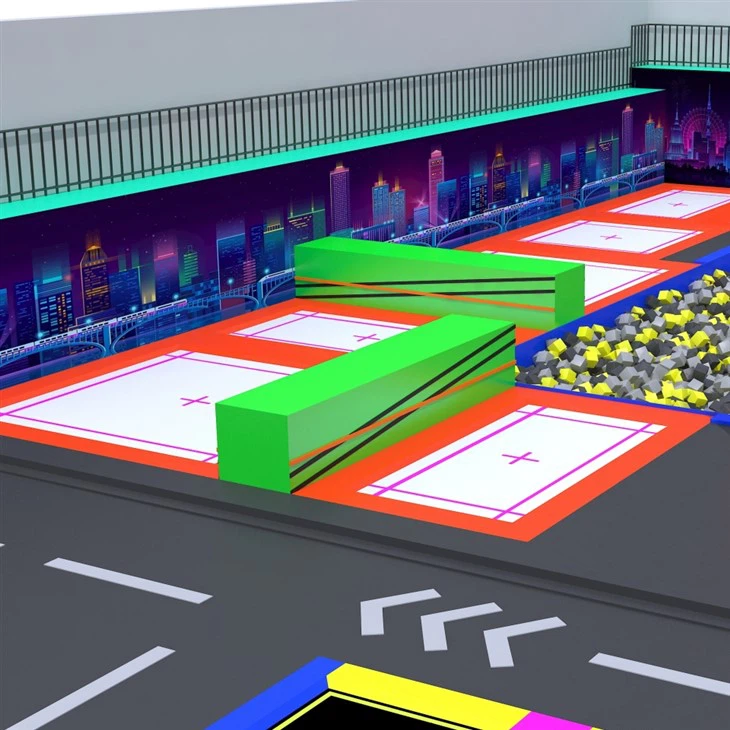
I. Age Suitability: Which areas are suitable for different ages?
Trampoline parks are not open to all ages. Appropriately matching age with area is the first step in ensuring safety.
Under 3 years old (toddlers): It is not recommended to enter the standard trampoline area. Children under 3 years old have immature bone development, and their cervical spine and spine have very weak impact resistance. The bounce force of standard trampolines can easily cause accidental injuries. Some trampoline parks have dedicated soft play areas (elastic mat areas) for toddlers, with very low bounce amplitude, making them a safer choice for this age group. Even so, parental supervision is mandatory at all times.
3-6 years old (Preschool children): Children only in the designated children's area.
Children in this age group can play in the children's designated area of the trampoline park. The trampolines in this area have lower elasticity, denser netting, and a softer surface, resulting in better overall risk control. Parents should supervise their children at all times and not allow them to enter the adult area or large free-jump area alone to avoid collisions with larger children or adults.
6-12 years old (Elementary school students): Can participate in most activities.
This age group is the core user group of trampoline parks. Their physical coordination and reaction speed are generally well-developed, and they can participate in most activities such as the free-jump area, foam pit, and basketball dunking area under the guidance of staff. However, participation in high-difficulty activities (such as large slides, flying saucers, and professional somersault platforms) requires assessment of the child's individual abilities and experience before deciding whether to participate.
Ages 12 and up: Can experience most activities
Children entering adolescence can participate in most activities at the trampoline park independently, but must still abide by the park rules. High-difficulty moves must be practiced under the guidance of a professional coach; blindly imitating others' high-flying flips is prohibited.
II. Safety Precautions: Rules to Understand Before Entering
1. Sign a Liability Waiver and Accurately Disclose Health Conditions
Reputable trampoline parks will require parents to sign a safety waiver or liability waiver before entry. Please read it carefully and fill in your child's health condition accurately. Do not check boxes arbitrarily because it's inconvenient. If your child has a history of bone diseases, heart problems, epilepsy, or recent surgery or fractures, you must inform the staff in advance.
2. Only One Person Allowed to Jump on One Trampoline at a Time
This is one of the most important safety rules at trampoline parks. When two people jump on the same trampoline at the same time, the combined impact will cause one person to bounce much higher and with greater force than expected, easily leading to loss of balance and injury. Parents must supervise their children closely and prevent them from sharing the same trampoline with other children.
3. Land with knees slightly bent; avoid landing head-and-neck first.
The correct landing posture on a trampoline is to land on both feet or both knees, with the knees naturally bent to cushion the impact. Never land directly on your head, neck, or back; this is a major postural error leading to serious injuries in trampoline sports. Upon arrival, staff can demonstrate the standard landing posture to your child.
4. Follow venue staff guidance throughout. Trampoline parks are crowded during peak hours. Follow staff's guidance and do not force your way into areas or push others. If your child appears tired or agitated, immediately remove them from the activity area to rest, as decreased concentration due to fatigue is a significant contributing factor to trampoline injuries.
III. Clothing Preparation: Head-to-Toe Attire Recommendations
Shoes: Wear non-slip socks, no shoes.
Almost all trampoline parks require shoes to be removed and provide or require the purchase of special non-slip trampoline socks. These socks have rubber anti-slip particles on the sole, providing effective grip on the trampoline surface and significantly reducing the risk of slipping. If your child has sweaty feet, bring a spare pair. Ordinary cotton socks offer insufficient slip resistance, and jumping barefoot poses a safety hazard; both are not recommended.
Top: Close-fitting sportswear, avoid loose clothing. Loose sweatshirts, hoodies, or clothing with drawstrings can easily get caught on the trampoline's springs during jumps, causing falls or pulling injuries. It is recommended to wear a close-fitting sports T-shirt or long-sleeved sports shirt. If the weather is cool, you can remove your outerwear and store it in the locker before entering.
Bottom: Stretch sports pants or tight-fitting pants. Jeans are unsuitable for trampoline sports due to their poor elasticity and restricted movement; skirts or shorts pose a risk of exposure during flips and handstands, and are also not recommended. Stretch sports pants or tight-fitting sports pants are the best choice, allowing for freedom of movement and ensuring safety.
Hair and accessories: Securely fasten and store. Long hair should be tied up tightly to avoid obstructing vision during jumps; earrings, necklaces, watches, rings, and other hard accessories may scratch yourself or others during jumps, so they should all be removed and stored before entering. For those who wear glasses, it is recommended to use sports glasses straps for fixation, or consider wearing contact lenses depending on your vision.
