Q: Why are indoor playgrounds important?
A: Indoor playgrounds provide a safe and stimulating environment for children to play and develop physical, mental, and social skills. Children can improve their physical strength, coordination, and balance by climbing, sliding, and crawling through various play structures.
Q: Can adults go to the indoor playground?
A: Indoor playgrounds for adults in particular are no longer just for children - now adults can join in too! Indoor playgrounds provide a great environment for physical and mental exercise. From climbing, hanging, jumping on trampolines to sliding, there is something for everyone.
Q: How would you describe an indoor playground?
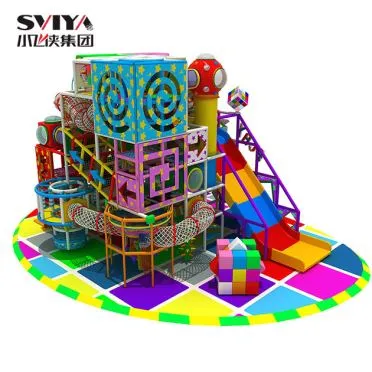
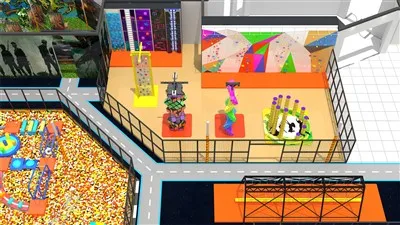
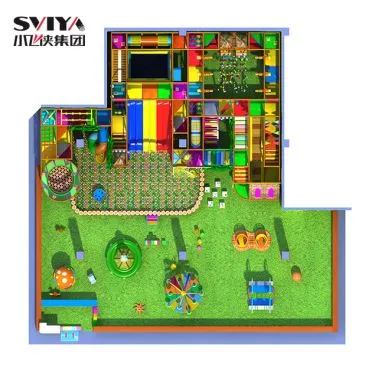
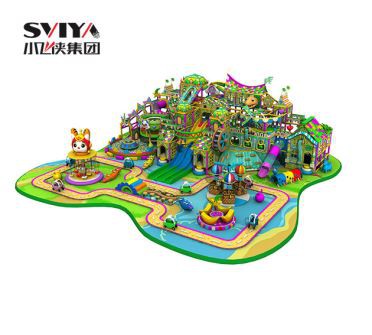
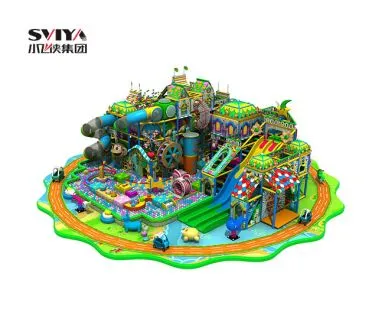
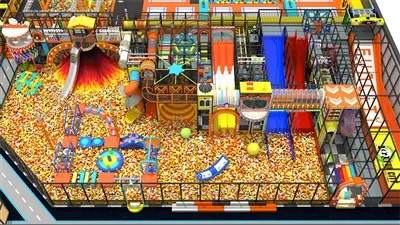
A: Indoor playgrounds are enclosed play areas, typically housed within a building or facility, designed for children to play in, irrespective of the weather outside. These play areas may contain slides, ball pits, climbing structures, and more.
Q: What is the difference between indoor and outdoor playgrounds?
A: Indoor playgrounds are often smaller but can still provide plenty of fun for kids, thanks to smartly designed play areas. They're also great in inclement weather or when it's too hot or cold outside. Outdoor playgrounds will typically have unsafe equipment that has deteriorated due to extreme weather conditions.
Q: How are indoor playgrounds cleaned?
A: Cleaning: using soap and water to remove physical, chemical, and microbial substances from surfaces. Sanitizing: using chemicals or other verified methods to reduce the number of germs on clean surfaces to a safe level.
Q: What is the best flooring for an indoor playground?
A: Foam: Tiles are the most common material type for foam indoor play area flooring, but you can find folding mats also. Rubber: Rubber flooring for an indoor playground surface are common in a tile format, and are especially useful when durability is a must. Tiles offer ASTM fall height ratings.
Q: What should I wear to an indoor playground?
A: Dress your children in comfortable clothes, but don't overdo it. You don't want their clothes to hang or be too tight to prevent them from playing. You should also tie their shoelaces tightly, empty everything out of their pockets, and remove any jewelry they may be wearing.
Q: Why do playgrounds have age restrictions?
A: The reason why people (including parents, childhood educators, preschool teachers, and workers of the Health Department) care about age and weight restrictions of playground equipment is that playground equipment-related injuries are common, severe, and life-threatening.
Q: What are the three types of playgrounds?
A: There are three main types to choose from: standalone structures, inclusive playground structures and themed playscapes. Standalone structures include: Swings. Slides.
Q: Why is outdoor play better than indoor play?
A: More outdoor time is linked with improved motor development and lower obesity rates and myopia (nearsightedness) risk. Safely getting some sun also helps us make vitamin D that our bodies need to stay healthy and strong. More engaged in learning. Playing outside promotes curiosity, creativity and critical thinking.
Q: What is indoor and outdoor play?
A: Playgrounds have their open spaces where children have to communicate with others on their own, whereas indoor play is much more controlled. This includes board games and card play, which exert more mental exercise rather than a physical one.
Q: What is a modular playground?
A: What is A Modular Playground? Many playgrounds you see are classified as a modular playground. A modular play system is a group of modules that fit together to form various sizes, shapes, challenges, and accessibility.
Q: What can you feel in a playground?
A: It's one of texture—the juxtaposition of soft and hard, smooth and rough, sharp, grainy or wet—and one of experience. Each thing we pick up to discover is unique: leaves, rocks, sand, water, metal, plastic, concrete, grass. Each has its own feeling.
Q: What do you wear to a birthday party at an indoor playground?
A: We recommend comfortable clothing and socks for children, so your kids can play and be active. Our play areas are considered ‘‘shoe-free’’ zones for both adults and children. Socks are required in all play areas. Don't worry if you forget your socks at home.
Q: What is the safest playground flooring?
A: However, when it comes to safety, no other material outshines engineered wood fiber (EWF). EWF is the most cost-effective loose-fill material for playground surfacing and has superior abilities for cushioning falls or impacts. Loose-fill surfaces, like EWF, are easy to install and maintain to adesired depth.
Q: Do playgrounds need to be sanitized?
A: So effective playground maintenance must include both cleaning and disinfecting efforts. Start by cleaning with your regular cleaner, detergent or soap and water to remove the germs and impurities. Then sanitize.
Q: How does indoor play help a child's development?
A: Playing inside encourages kids to use their creativity to transform ordinary obstacles and objects into something else. Imaginative play, or playing pretend, increases children's social skills while helping them build their vocabularies and learn how to work with others.
Q: What is the purpose of a playground?
A: Playgrounds are essential safe spaces where children can be themselves and express their fun-loving nature while developing crucial cognitive, physical, social and emotional skills.
Q: How do you clean indoor playground equipment?
A: For cleaning most playground equipment, a bucket with soapy water is all you need. Avoid expensive, chemical cleaners and go for a standard all-purpose cleaner from the supermarket. Use a wet cloth to regularly wipe off all areas of the elements you can reach. This is not only good for hygiene, but also looks neat.
Q: What is usually in a playground?
A: Modern playgrounds usually include a combination of swings, slides, climbers, spring riders, spinners, and sensory panels to maximize fun, safety, and accessibility. Many new types of playground equipment will also help improve coordination, strength, and critical thinking (among other benefits).
Q: What is the future of indoor playgrounds?
A: In my opinion, the future of indoor play will focus on creating sensory-rich environments that stimulate children's senses and enhance their play experiences. You can do this by incorporating interactive lighting systems that respond to touch, sound, or motion, creating an immersive ambiance.