


The lighting design of indoor children's playgrounds not only impacts the play experience but is also closely related to children's vision and activity safety. It must strike a balance between functionality, safety, and comfort. Specific considerations are as follows:
1. Light Source Selection: Eliminate Eye Harm
Preferably use low-blue-light, flicker-free LED lamps to avoid the flicker and UV radiation associated with traditional fluorescent lamps, which can irritate children's retinas. Lighting color temperatures should be controlled within the warm white range of 4000K-5000K to ensure brightness and clarity without the glare of cool white light (above 6000K) or the blurring caused by warm yellow light (below 3000K).
Exposed bulbs or direct light sources are prohibited. Frosted lampshades or grille panels are required to prevent direct light exposure to children's eyes, especially in areas such as the tops of slides and climbing frames where children may be looking up.
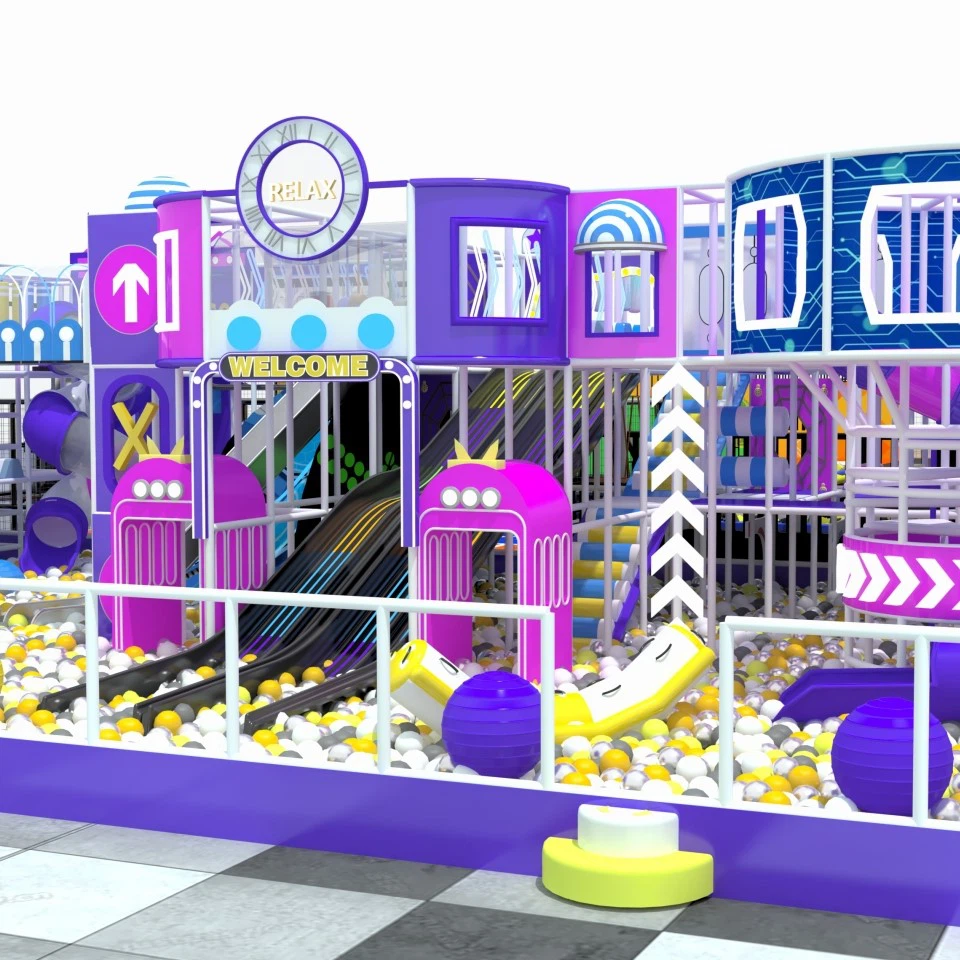
2. Light Intensity: Adapt Zoning to Activity Needs
Dynamic Activity Areas (e.g., playgrounds and trampoline areas): Light intensity should reach 500-700 lux to ensure that children can clearly discern obstacles and floor height differences during rapid movement and jumping, thereby reducing the risk of collisions. A combination of ceiling fixtures and floor spotlights can be used to prevent shadows from obstructing light.
Static Activity Areas (e.g., picture book corners and craft tables): Light intensity should be controlled at 300-500 lux, supplemented with adjustable table or wall lamps to meet the lighting requirements for delicate tasks like reading and drawing, while avoiding glare that can cause visual fatigue.
Pathways and Transition Areas: Light should be uniform and soft (300-400 lux) to avoid excessive changes in brightness that can cause visual adaptation problems, such as temporary blurring when moving from brightly lit areas to shadows.
3. Light Distribution: Eliminate "Blind Spots"
Lighting layouts should cover all areas of play, especially under structures and in gaps, such as inside climbing nets and at the bottom of ball pools. Small recessed floor lamps or light strips can be installed to prevent safety hazards caused by insufficient light.
Avoid the "spot effect": Light fixtures should be spaced evenly (usually every 2-3 meters) to ensure that illumination levels on the floor and walls vary by no more than 20%. This prevents areas of excessive brightness or darkness that could cause children to misjudge their surroundings, such as accidentally stepping on a shaded step.
4. Utilizing Natural Light: Balancing Lighting and Protection
If the playground has windows, use adjustable sunshades or blinds to control the amount of natural light entering. Avoid direct midday sunlight, which can cause overheating or glare. Glass should be coated with UV-blocking film to minimize UV damage to children's skin and eyes.
On cloudy days or in the evening, when natural light is insufficient, artificial lighting should be used to supplement the lack of natural light. This ensures a stable indoor lighting system and prevents sudden changes in light that could disrupt children's activities.
5. Safety and Atmosphere Details
Lighting fixtures must be securely mounted at a height of no less than 2.5 meters (out of reach of children) and be waterproof with electric shock protection, especially near water, such as in play areas and sinks.
Decorative low-light elements, such as cartoon-shaped night lights and floor-mounted star-shaped light strips, can be incorporated to complement the theme of the playground, creating a playful atmosphere without disrupting the main lighting. However, ensure that their brightness does not exceed 10% of the main light source to avoid distracting children.
Through scientific lighting design, children can be provided with a clear and comfortable visual environment that protects their eyesight and enhances safety through light guidance. This ensures that the playground is both functional and enjoyable within a bright and soft atmosphere.
